

Key Takeaways
- Hendrik Hey’s MILC has grown from a media licensing marketplace into a full Web3 infrastructure covering content, AI production, and streaming, all live and generating revenue.
- MILC is developing a decentralized creative studio designed to operate as a “Pixar for Web3,” combining AI-supported film and animation production with programmable ownership models that automatically pay every contributor.
- The Digital Genesis Fund brings MILC into a regulated Luxembourg investment structure, providing an institutional-grade framework for scaling Web3 infrastructure.
When most blockchain projects were collapsing under regulatory pressure and market downturns, MILC (Media Industry Licensing Content) was doing something different. It kept building. The company, founded by German media veteran Hendrik Hey, operates a live metaverse marketplace processing real transactions for media companies, brands, and developers. It has expanded into AI-powered production infrastructure, decentralized streaming, and a regulated Luxembourg investment fund that gives institutional investors a way into Web3 without the legal uncertainty that has kept most of them on the sidelines.
MILC started as a solution to a problem Hey had identified after three decades in European broadcast television. Content moves instantly across borders, but the systems that track ownership and pay creators remain stuck in an earlier era. Royalty statements arrive late. Licensing deals require armies of lawyers. Value leaks to middlemen at every step. MILC automates those broken processes using blockchain, encoding ownership and revenue splits directly into digital assets so payments happen automatically when content is used.
The Infrastructure Is Live and Growing
MILC has received more than 20 million euros in financing for technology, software development, and creator tools. A content library valued at approximately 35 million euros serves as an asset anchor, separating MILC from the vaporware that characterized much of the Web3 boom.
MILC functions as a persistent three-dimensional environment where intellectual property can be tokenized, licensed, and traded in real time. Creators, publishers, brands, and developers coexist within a shared infrastructure that handles everything from content creation to revenue distribution.
The creator economy is expected to grow by more than $434 billion between 2026 and 2030, expanding at a 23% annual rate. Traditional systems continue to fail the people who actually make things. MILC addresses this directly. The infrastructure treats ownership as programmable data rather than paperwork, meaning rights travel with the content and payments occur at the point of use.
The company is GDPR and MiCAR compliant, allowing it to operate within European regulatory frameworks without the legal ambiguity that has paralyzed American Web3 projects. That compliance matters because institutional investors have avoided the space precisely because they could not explain speculative token projects to their compliance departments. MILC offers something they can actually underwrite.
AI Production and the Decentralized Studio
MILC has expanded into AI-powered production, but not in the way most people expect. This is not about generating cheap content or replacing human creativity. Production, in the MILC ecosystem, is infrastructure.
The company is developing a highly efficient creative studio intended to evolve into a decentralized “Pixar for Web3.” The focus lies on AI-supported film and animation production that combines creative excellence with entirely new production and monetization models. The studio serves as a lighthouse use case, demonstrating that MILC enables not only infrastructure but also iconic, scalable content creation.
Under the current model, a studio finances a project, owns the intellectual property, and distributes whatever portion of revenue it decides to share with the people who actually made it. Writers, animators, composers, and directors negotiate their slice upfront and then largely lose connection to what their work earns afterward. MILC’s model encodes ownership differently from the very first frame. Every participant, from the lead animator to the composer who scored a single scene, holds a programmable stake in what they helped create.
This is not how the film industry has ever worked, but it is precisely how MILC intends to make it work. Access to global budgets, fractional IP ownership, and long-term revenue chains becomes possible when the infrastructure treats every contribution as a programmable asset.
“This must be what it felt like when the first Hollywood pioneers built their studios and set a new era of storytelling in motion,” says Hendrik Hey. “Today, we find ourselves at a similar turning point, but this time, the canvas is infinite: a three-dimensional, transparent, and interactive metaverse.”
A Regulated Path for Institutional Capital
MILC is also the anchor investment in the Digital Genesis Fund, a Luxembourg SICAV-RAIF launched with 55 million euros in assets and a governance structure built for institutional capital. The Fund operates under the same alternative investment rules that govern private equity and hedge funds across Europe. Governance sits with 6 Monks as AIFM, Q Securities S.A. as Depositary, Ernst & Young handling the audit, and DLA Piper on legal structuring.
The Fund operates as a multi-compartment vehicle, meaning each investment area is legally and economically separate from the others. MILC handles media. Additional compartments are planned for Energy Tech, Automotive and Mobility, Real-World Assets, and AI and Data Infrastructure. The investment pipeline includes targets across production, streaming, AI, compute infrastructure, and rights governance. Each target generates independent revenue today and stands to benefit from integration with the broader MILC infrastructure.
For investors who watched the Web2 era from the sidelines as networks like YouTube and TikTok reshaped global markets, this structure offers something earlier blockchain ventures could not provide: a regulated entry point from the very beginning.
About MILC
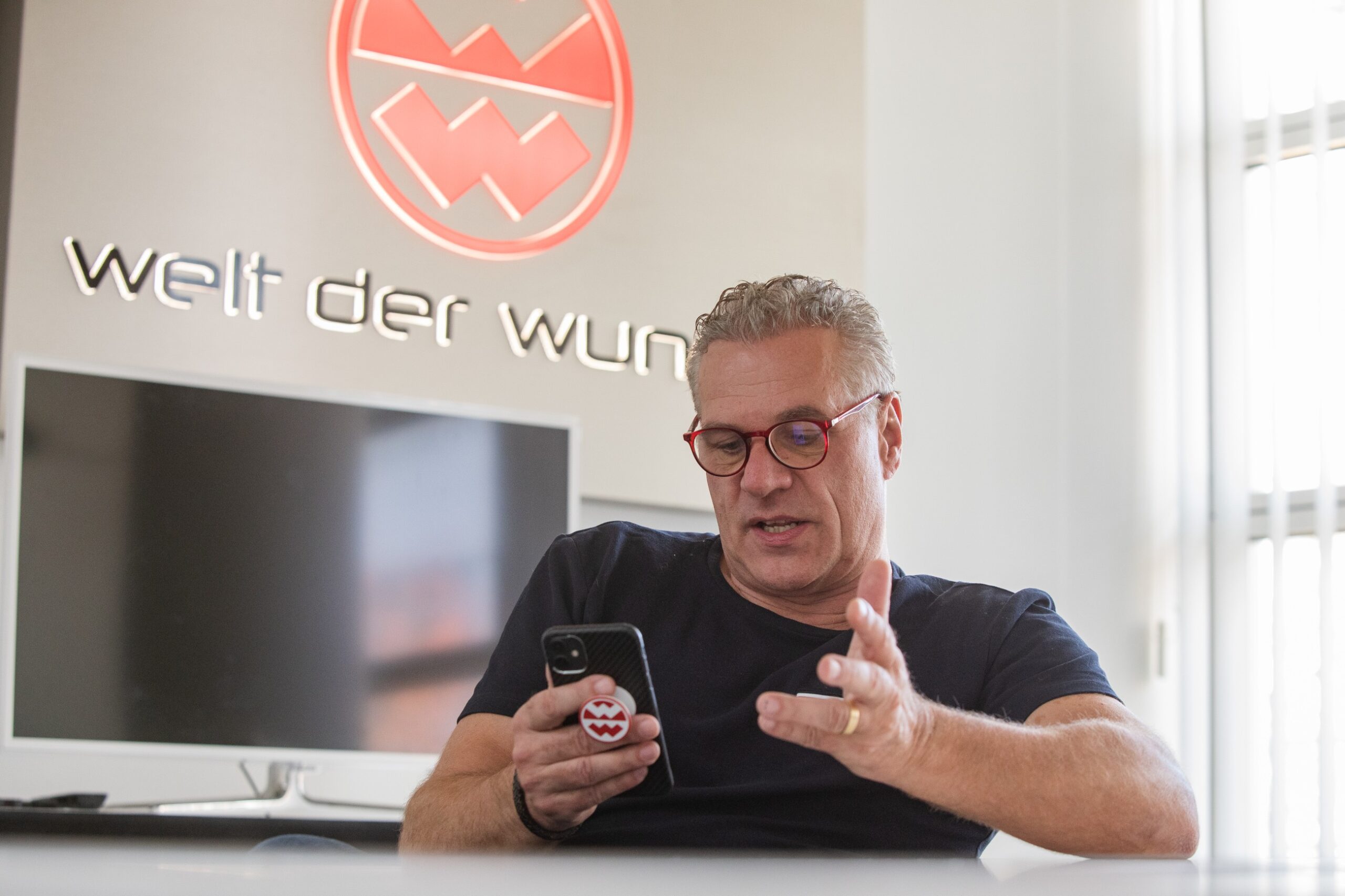
Hendrik Hey is the Founder of MILC (Media Industry Licensing Content), a pioneering company in the blockchain and metaverse space, with a strong background in media and content. MILC operates a real live metaverse platform that serves not only the media industry but also various industrial use cases. The company also focuses on Web3 consulting, aiming to support complex real-world industries on their way into Web3. MILC is a sister company of European media giant Welt der Wunder, which Hey founded over 25 years ago. For more visit: https://www.milc.global/.